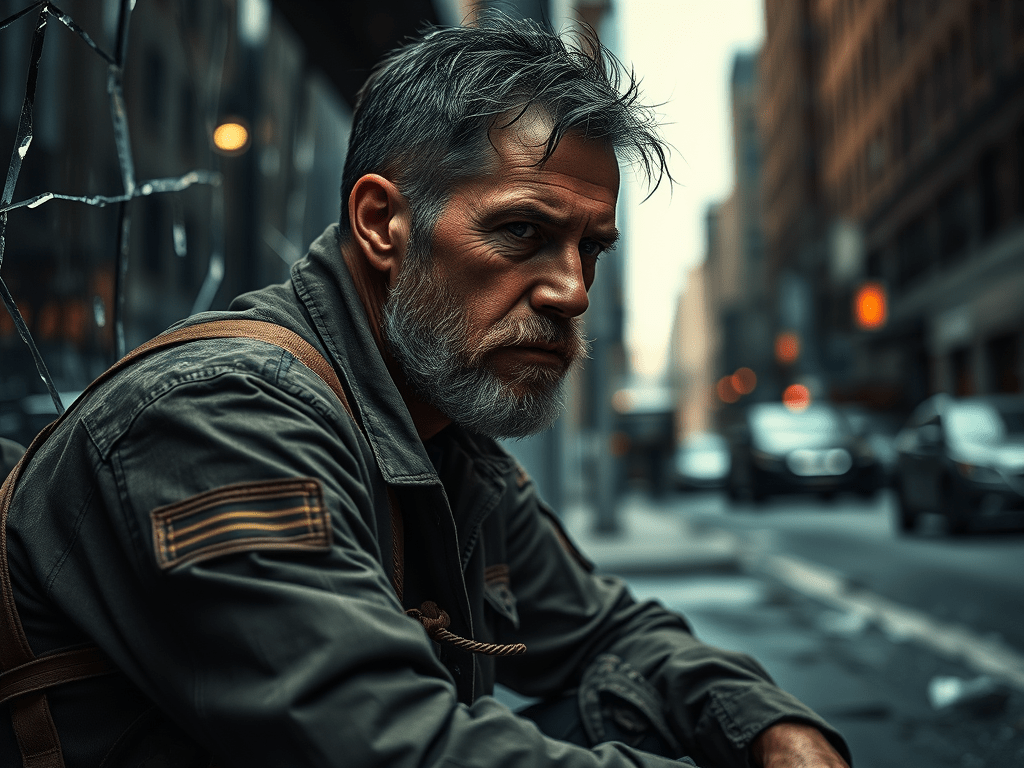
Terry Williams stepped down from the cab of the semi-truck, hoisting his backpack onto his shoulder. This bag had seen its fair share of action, having been with him through two tours in Iraq and three in Afghanistan. Since leaving the military, Terry has been on the move constantly, with no idea where he’ll end up the next day. His mind remains haunted by war and nightmares that could make Stephen King tremble.
“Where are we?” he asked the driver.
“Mount Airy, North Carolina,” the driver answered
Terry nodded, the name ringing a distant bell. Mayberry. Andy Griffith. One of those small Southern towns that seemed to exist more in American mythology than reality.
“Thanks for the ride,” he said, adjusting the worn strap cutting into his shoulder.
The driver grunted something unintelligible before pulling away, leaving Terry in a cloud of diesel exhaust. He stood at the edge of what appeared to be the main street, watching as the truck disappeared around a bend. The late afternoon sun cast long shadows across the pavement.
His stomach growled. When was the last time he’d eaten? Somewhere in South Carolina, a truck stop with flickering fluorescent lights and coffee that tasted like battery acid. He patted his pocket, feeling the thin fold of bills. Enough for a meal before finding a place to camp for the night.
Terry looked around the street and spotted a diner nearby. He chuckled to himself and grinned, saying, “It just had to be. Aunt Bea’s—a perfect name for a restaurant in this town.”
The bell above the door chimed as he pushed inside, and the familiar smell of grease and coffee hit him, comforting in a way that reminded him of diners from his childhood. The interior looked like it hadn’t changed since the 1960s, with red vinyl booths and black-and-white checkered floors. A few locals occupied scattered tables, their conversations dying to murmurs as they glanced his way.
Terry felt their eyes on him. He knew what they saw: a man who needed a bath with a three-day beard and clothes that had been slept in. The kind of drifter their mothers had warned them about. He’d grown used to the looks, the way conversations shifted when he walked into a room.
A waitress with graying hair and kind eyes approached, her name tag reading “Dolores.” She smiled, and it seemed genuine enough.
“Afternoon, hon. Sit where you want, I will be with you in a second.”
Terry settles into a booth and starts browsing the menu. Dolores approaches and pours him a cup of coffee, smiling as she says, “You look like you could use this.” Noticing his bag, Dolores inquires, “Were you in the service?”
Terry looked up from the menu, meeting her eyes briefly before glancing back down. The question always came, eventually. Something about the way he carried himself, the rigid posture that never fully relaxed, the unconscious habit of sitting with his back to the wall and a clear view of the exits.
“Army,” he said, keeping his voice neutral.
Dolores nodded, her expression shifting to something he recognized, that particular blend of gratitude and pity that civilians wore when they encountered veterans. He’d seen it countless times, and it never got easier to stomach.
“My nephew just got back from his second deployment,” she said, refilling his cup though it was still mostly full. “Afghanistan. He’s having a tough time adjusting.”
Terry’s jaw tightened. The coffee suddenly tasted bitter against his tongue, and the fluorescent lights seemed to buzz louder overhead. He could feel the others staring his way. “Thank you for your service,” said Dolores. The table across from him had 3 old men who turned to the waitress and said, “Dolores, his meal is on us, we will take care of the check, order whatever you like, son.”
“You don’t have to do that,” said Terry.
“Young man, it’s the least that we can do.”
“Thank you!” Terry replied.
Terry unfolded a map from his bag and began outlining the journey he planned to take. Quietly to himself, he murmured, “I guess I’ll follow Route 52 up Fancy Gap mountain, which will lead me across the Virginia border into Cana and then to a town named Hillsville.”
He traced the route with his finger, feeling the worn paper beneath his skin. The mountains would be good, fewer people, places to disappear if the dreams got too loud. He’d learned that cities made everything worse, all that noise and chaos pressing against his skull like a vice.
Dolores returned with a steaming plate of meatloaf, mashed potatoes, and green beans. Real food, not the gas station sandwiches and vending machine meals that had sustained him for weeks. The smell made his mouth water, and he realized just how hollow his stomach felt.
“That’s a long walk you’re planning,” Dolores said, glancing at the map. “You sure you don’t want to catch a bus? There’s a station about one mile up the road.”
Terry shook his head, cutting into the meatloaf. The first bite tasted like home, whatever that meant anymore. “I like walking. Helps clear my head.”
The three men at the other table were watching him with unabashed interest now. One of them, a white-haired fellow with deep creases around his eyes, nodded approvingly.
“You military boys always were tough as nails,” he called over. “I was in Korea myself. Different war, same hell.”
Terry acknowledged him with a small nod, not wanting to invite further conversation but knowing better than to be rude to someone who’d just bought his meal. The old-timer seemed to understand, turning back to his companions.
The meatloaf was better than anything Terry had tasted in months. He ate methodically, savoring each bite while studying the map. The mountain route would take him at least eleven hours on foot, maybe more. He’d need to find somewhere to sleep tonight before heading out at first light.
As he finished his meal, the bell chimed again as someone entered. Terry glanced up reflexively, his body tensing before he could stop it. Just a woman with a toddler in tow, nothing threatening, but his pulse had already quickened. The kid was whining about wanting ice cream, his voice cutting through the diner’s ambient noise like a blade.
Terry’s grip tightened on his fork. The sound reminded him of something—a marketplace in Kandahar, children’s voices echoing off concrete walls moments before the world exploded in dust and screaming metal. He forced himself to breathe slowly, counting the inhales like his therapist had taught him years ago. Four in, hold for four, four out.
The sensation passed, leaving him drained and hollow. He folded the map carefully, his hands steadier now, and reached for his wallet. The three old men were already settling up at the counter, the Korean War veteran catching his eye and offering a small salute before heading out into the fading daylight.
Terry sat for a moment longer, letting the quiet settle around him. The woman with the toddler had moved to a booth near the window, and the child’s cries had subsided into contented babbling over a bowl of ice cream. The sound no longer bothered him; it was different, softer somehow.
He stood and shouldered his pack, nodding to Dolores as she cleared his plate.
“You be careful out there, hon,” she said. “Weather’s supposed to turn tonight. Might want to find shelter before you head up that mountain.”
The advice was sound, but Terry had slept through worse than a spring storm. He pushed through the door and back onto the street, where the air had grown cooler and carried the scent of rain. The sun hung low behind the mountains, painting the sky in shades of orange.
Terry scanned the street, weighing his options. The approaching storm didn’t worry him much—he’d survived sandstorms that could strip paint off a Humvee—but the prospect of hiking in mud didn’t appeal to him. His boots, though military-grade, had seen better days, but he decided to continue on Route 52, making the most of the travel time available before the storm hit.
As he walked, the pavement felt slightly uneven beneath his worn boots. The cool mountain air brushed against his face, carrying traces of coming rain that tickled his nostrils. After years in the desert, he’d almost forgotten what rain smelled like before it fell—that earthy, electric scent that hung in the air like a promise.
Terry checked his watch. Almost six. He had maybe two hours of daylight left, not enough to make serious headway toward Fancy Gap. The sky darkened to the west, clouds building into towering anvils above the mountain ridges. Lightning flickered deep within them, too distant for thunder.
His knees ached from sitting too long in the truck cab. Walking would loosen them up. He rolled his shoulders, adjusting the weight of his pack, and headed north along Route 52. The road stretched before him like a ribbon, winding its way toward the mountains.
After walking for twenty minutes, Terry felt the first heavy raindrops gently touch his face and arms. However, he was aware that these gentle starts could be deceiving. The distant sound of thunder validated his concerns. He had to find shelter quickly. At that moment, a car pulled up next to him, and an older woman with a broad smile said, “Son, that storm is coming soon. I’m not sure how far you’re headed, but I can give you a lift to the bottom of Fanch Gap.”
“That’s kind of you,” he said, rain beginning to patter more steadily on his shoulders. “I don’t want to be any trouble.”
“No trouble at all. I’m heading that way anyway.” She leaned across to unlock the passenger door. “Name’s Martha Henley. I live just past the gap.”
Terry hesitated for only a moment before climbing into the car. The interior smelled of cinnamon and something floral—potpourri maybe, reminding him of his grandmother’s house back in Ohio. A small wooden cross hung from the rearview mirror, swaying gently as Martha pulled back onto the road.
“Thank you, ma’am,” he said, setting his pack between his feet.
“Call me Martha. ‘Ma’am’ makes me feel like my mother-in-law,” she chuckled, eyes fixed on the road as fat raindrops began to splatter against the windshield. She reached over and turned the wipers on. “You military?”
“Yes.” Terry kept his answer short, watching the countryside roll by through the window. Fields gave way to thicker stands of trees as they approached the mountain. The rain was starting to come down slower, which meant they were heading away from the storm, giving him time to find shelter.
Martha glanced at him through the corner of his vision, and Terry could sense her weighing whether to push for more details. The silence stretched between them, filled only by the rhythmic squeaking of the wipers and the hum of the engine climbing the gradual incline.
“My late husband was Navy,” she said finally. “Served in Vietnam. He used to say the hardest part wasn’t the war itself—it was coming back to a world that kept spinning while you were gone.”
Terry’s chest tightened. He’d heard variations of this conversation a hundred times, well-meaning civilians trying to connect, to understand something that couldn’t be understood unless you’d lived it. But something in Martha’s voice felt different. No pity, no awkward gratitude. Just recognition.
“He struggled for years after he came home,” she continued, her voice softer now. “Wouldn’t talk about it much, but I could see it in his eyes. That far-off look, like he was seeing something that wasn’t there.”
Terry’s hands clenched in his lap. The familiar weight settled on his chest, making each breath feel deliberate. He knew that look; he had seen it in his own reflection too many times. The way your eyes went flat when the memories took hold, when the present dissolved and left you standing in some godforsaken stretch of desert or mountain village where the air tasted like cordite and fear.
“He found his way through it, though,” Martha said, steering around a curve as the road began to climb more steeply. “Took time. Took patience. But he did.”
The trees crowded near the road, their branches creating an overhead canopy that dampened the road noise and cast shadows under the stormy clouds. Terry watched the branches sway in the wind, their leaves rustling with the promise of heavy rain to come. The sound reminded him of palm fronds in Iraq, the way they’d whisper in the desert wind before the sandstorms hit. He pushed the memory away, focusing instead on the green canopy overhead—so different from the barren landscapes that haunted his sleep.
“What kind of work did your husband do?” Terry asked, surprising himself. He usually avoided these conversations, but something about Martha’s steady presence made the words come easier.
“He was a mechanic. Had his own shop in town for thirty years.” She smiled, and Terry could hear the warmth in her voice. “Said working with his hands helped quiet his mind. Gave him something to fix that actually stayed fixed.”
Terry understood that. In the service, everything felt temporary—bases, missions, even the people around you. You’d spend months getting to know someone, building trust, maybe even friendship, and then orders would come and you’d scatter to different units, different continents. Nothing permanent, nothing you could count on lasting.
The road curved sharply, and Terry felt his stomach lurch as they climbed higher. Through gaps in the trees, he caught glimpses of the valley below, the town of Mount Airy shrinking to a collection of tiny buildings and streetlights beginning to flicker on in the gathering dusk. The rain had started to catch up, small drops now hitting against the windshield.
“There’s the gap up ahead,” Martha said, pointing through the windshield at a break in the mountain ridge where the road crested. “Weather station says this storm’s going to get worse before it gets better. You sure you don’t want me to take you a little further? I’ve got a guest room that’s not being used.”
“I appreciate the offer,” he said, “but I don’t want to impose, and believe me, Martha, I should keep going. Thank you for the ride, and I am sorry for the loss of your husband.”
Martha brought the car to a halt at the road leading to her house and gave Terry a warm smile. “Please be safe, Terry,” she urged. “Find shelter from this storm as soon as you can. There’s an old abandoned motel a few minutes up the mountain where you might be able to stay until the storm passes.”
Terry expressed his gratitude to Martha once more before beginning his trek up Fancy Gap. The rain intensified, with larger droplets falling as thunder echoed in the distance. He paused to retrieve his rain poncho from his bag, putting it on just as the downpour grew stronger. Cars drove by, but no one stopped to offer him a ride. He understood; who would want to pick up a stranger these days, especially one walking in a downpour that would drench their seats?
Terry had walked no more than 15 minutes when he rounded a curve and saw a red water wheel in the distance. “Is that a red water wheel, or am I seeing things?” he asked himself. As he became closer, he could see that it was a part of the old abandoned motel Martha had spoken of. Terry approached cautiously, military instincts kicking in. He scanned the perimeter, noting multiple exits, possible cover positions, and the dense tree line that pressed close to the back of the property. Thunder crashed overhead, much closer now, and a flash of lightning illuminated the scene in stark white. The rain was coming down in sheets, soaking through his pants and boots.
He made his way to what appeared to be the office, its door hanging askew on rusted hinges. Terry pushed the office door open with his shoulder, wincing as it scraped against warped wood. The smell hit him immediately—mildew, rotting carpet, and something else underneath that made his nose wrinkle. Mouse droppings, maybe worse. But it was dry, and the roof seemed intact based on the lack of water pooling inside.
The small flashlight came to life in his hand, its beam cutting through the darkness. Dust motes swirled as light revealed the reception desk—a monument to abandonment with its scattered papers gone yellow with age and what must have been the guest registry, its pages warped by humidity. A few room keys still dangled from their diamond-shaped tags on the pegboard behind. The thunder came without warning, a deafening crack that rattled the windows, and suddenly Terry wasn’t in an abandoned motel anymore but diving for the floor, his body remembering what his mind wanted to forget.
The taste of sand filled his mouth, gritty and sharp, and he could hear the whine of incoming mortars over the drumming rain. His hands pressed against the moldy carpet, feeling for his rifle, for anything solid and familiar. The smell of cordite mixed with the musty air, and for a heartbeat, he was back there, back in that forward operating base outside Fallujah where the mortars came every night like clockwork.
Another crack of thunder brought him back, chest heaving, sweat mixing with the rainwater that had soaked through his clothes. The flashlight had rolled away, its beam creating wild shadows on the water-stained walls. Terry pushed himself to his knees, then to his feet, legs unsteady. His heart hammered against his ribs like it was trying to break free.
“Get it together,” he muttered, retrieving the flashlight. The beam trembled in his grip but eventually steadied. The adrenaline still coursed through his veins, making his fingertips tingle. He drew in a deep breath, held it for four counts, then released it slowly. The technique rarely worked completely, but it helped bring him back to the present.
“Just thunder,” he whispered to the empty room. “Just a storm.”
Terry forced his breathing to slow. The motel’s damp interior came back into focus
He swept the flashlight beam across the office, looking for a place to wait out the rain. The desk chair was missing its back, and the small couch against the far wall had springs poking through its cushions. Better than nothing. Terry approached it cautiously, nudging it with his boot to check for unwelcome residents before lowering himself onto the edge.
Water dripped from his hair down the back of his neck, sending a cold shiver along his spine. He shrugged off his backpack and dug through it, past the rolled t-shirts and spare socks, until his fingers found the small bottle of aspirin. His head was starting to pound, whether from the adrenaline crash or the barometric pressure, he couldn’t tell. He dry-swallowed two pills and leaned back against the couch’s torn fabric.
The rain hammered against the windows with renewed fury, and the wind howled through gaps in the building’s frame. Each gust sent a whistle through the office that reminded him uncomfortably of the sound incoming rounds made, but he forced himself to focus on the differences. This was wind, not weapons, water, not war.
Terry pulled out his map again, though he knew the route by heart. The familiar ritual of planning helped calm his nerves. From here to Hillsville was maybe eleven miles, all mountain roads that would be treacherous in this weather. He’d wait until morning, let the storm pass. The couch might be
uncomfortable, but he’d slept in worse places. A lot worse.
He closed his eyes and tried to let the sound of rain become just rain, not the percussion of distant explosions or the rattle of small arms fire. Sometimes it worked. Tonight, with his nerves still raw from the thunder, he wasn’t so sure.
A new sound cut through the storm—the crunch of gravel under tires. Terry’s eyes snapped open, his body tensing as headlight beams swept across the office windows. The engine noise grew louder, closer, then stopped. A car door slammed.
Terry clicked off his flashlight and moved to the window, keeping low. Through the rain-streaked glass, he could make out the shape of a pickup truck, its headlights still on. Someone was moving around outside, a dark figure barely visible in the downpour.
His pulse quickened. Could be nothing— another stranded traveler, someone seeking shelter like himself. Or it could be something else entirely. In his experience, people who showed up at abandoned places in the middle of storms usually fell into one of two categories: those running from something, or those looking for someone to run from.
Terry moved away from the window and positioned himself behind the reception desk, where he had a clear view of the door but remained hidden in shadow. His hand instinctively moved to his hip, searching for a sidearm that hadn’t been there in years—old habits.
The footsteps outside grew closer, deliberate despite the rain. Whoever it was wasn’t rushing for shelter—they were moving with purpose. Terry’s breathing slowed, his body settling into the hyperaware state that had kept him alive overseas. Every sound became amplified: the squeak of wet boots on gravel, the rustle of fabric, the metallic click of what might have been a doorknob. The door swung open with a long, pained creak, letting in a gust of wind and rain.
A man stepped inside, silhouetted against the dim light from the truck’s headlamps. Tall, broad-shouldered, wearing what looked like a sheriff’s uniform. Water streamed from his hat brim as he swept a flashlight beam around the office.
“Hello?” the man called out. “Anyone in here? I saw a light.”
Terry remained still, weighing his options. The uniform could be legitimate, or it could be trouble. He’d seen insurgents in stolen police uniforms before, learned the hard way not to trust appearances.
“I know someone’s here,” the voice continued, more insistent now. “I’m Sheriff Barton, Carroll County Sheriff’s Department. Just checking to make sure everything’s alright.”
A beam of light moved over the desk, and a voice announced, “Terry Williams, Sheriff and former United States Army, just seeking shelter from the storm.”
Terry froze, a cold trickle of sweat running down his spine despite the chill in the air. His instincts warred with each other—maintain cover or reveal himself. The sheriff’s flashlight beam swept closer to his hiding spot.
“I’m not looking for trouble,” Terry called out, slowly rising from behind the desk with his hands visible. “Just waiting out the storm.”
The sheriff’s flashlight beam hit him directly in the face, momentarily blinding him. Terry squinted against the glare, his muscles tensing as he fought the urge to duck away.
“Mind lowering that light, sir?” Terry asked, keeping his voice steady.
The beam dropped, revealing a weathered face beneath the dripping brim of the hat. The sheriff looked to be in his fifties, with deep creases around his eyes and a salt-and-pepper mustache. His uniform was soaked through at the shoulders and chest. The badge on his uniform caught a glint of light, looking authentic to Terry’s practiced eye.
“Sorry about that,” the sheriff said, holstering his flashlight on his belt. “Can’t be too careful these days. This place attracts all sorts of drug dealers, runaways, vagrants.”
Terry nodded, understanding the implication. In the sheriff’s eyes, he probably fit that last category.
“Just passing through,” Terry explained, gesturing to his backpack. “Got caught in the storm.”
Sheriff Barton studied him, eyes lingering on Terry’s military-style boots and the way he held himself. Recognition flickered across his face.
“Army?”
“Yes, sir. Ten years.”
The tension in the room eased slightly. The sheriff removed his hat, shaking water from the brim. “My daughter’s a lieutenant. Army Corps of Engineers. Afghanistan.
Terry’s shoulders relaxed fractionally. The shared connection of military service created a bridge, however thin. He knew how parents of deployed soldiers looked at veterans—with a mixture of respect and the desperate hope that someone, somewhere, was looking out for their child the way they’d want someone to look out for him.
“She’s in a tough spot,” Terry said. “Engineers see a lot of the aftermath.”
Sheriff Barton nodded, his expression growing somber. “She doesn’t talk about it much when she calls. Says she’s fine, but…” He trailed off, studying Terry’s face in the dim light. “You know how it is.”
Terry knew exactly how it was. The careful editing of stories when you called home, the way you learned to sound normal even when your hands still shook from the morning’s patrol. The weight of carrying two versions of yourself—the one that survived over there, and the one your family needed to believe was just fine—the careful filtering of nightmares, of things no one back home could possibly understand.
“Yeah,” Terry said simply. “I know how it is.”
A moment of understanding passed between them, punctuated by another crash of thunder that rattled the windows. This time Terry managed not to flinch, though his jaw tightened reflexively.
“This place isn’t safe,” Sheriff Barton said, glancing up at the ceiling where water had begun to seep through in one corner. “Roof’s been compromised for years. County’s been trying to get it condemned, but paperwork moves slow around here.”
Terry followed his gaze to the growing water stain. “I’ve slept in worse.”
“No doubt,” the sheriff replied, “where are you heading?”
“A little town not far from here in Virginia called Hillsville,” answered Terry.
Sheriff Barton gave a smile and a small laugh, “Young man, you are already in Virginia. You crossed the state line about a mile back,” Sheriff Barton said. “That storm’s disorienting, I’ll give you that. Hillsville’s not far,” the sheriff continued, “but you won’t make it tonight. Not in this.” He gestured toward the window where lightning illuminated sheets of rain hammering against the glass.
“If you don’t mind me asking, why Hillsville? Do you have family, friends, or a job waiting?” asked Sheriff Barton.
“None of those options, sir. It’s hard to explain, but I’ve felt compelled to go in this direction. Ever since the dinner, something has been pulling me toward it,” Terry said. “My mother always used to say that when you have such a strong feeling, it’s the Lord guiding you.”
“Are you a man of faith, Terry?” asked Sheriff Barton.
“My mother was,” Terry said, his voice dropping. “And I believed I was too. Then I watched a chaplain perform last rites over three men from my unit while mortars fell around us.” He looked down at his hands. “Faith doesn’t survive intact when you’ve held a canteen to a child’s cracked lips while her mother’s body lies covered by a sheet ten feet away. Not the kind of faith I grew up with, anyway.”
Sheriff Barton was quiet for a long moment, rain drumming against the windows filling the silence. Terry could hear the man’s breathing, steady and measured, and wondered if he’d said too much. People back home didn’t want to hear about the weight of carrying dying children or the way faith crumbled like dried clay under the hammer of war.
“My grandfather used to tell me that faith isn’t something you have,” the sheriff said finally. “It’s something you do. Even when you can’t feel it anymore.”
Terry looked up, studying the older man’s weathered face in the dim light. There was something in his voice, not the hollow platitudes Terry had grown used to, but the rough texture of someone who’d wrestled with his own doubts.
“He was a medic in World War Two,” Sheriff Barton continued. “Said he stopped believing in a loving God somewhere around Normandy. But he kept acting like there was one anyway. Kept patching up soldiers, kept saying prayers over the dying, kept writing letters to their families. Said faith wasn’t about feeling God’s presence, it was about doing what was right even when God felt absent.”
Terry felt something shift in his chest, not quite recognition but not dismissal either. The idea sat there, foreign but not entirely unwelcome. He’d spent so many nights staring at motel ceilings, wondering if the hollow ache where his faith used to be would ever fill with something else.
“That’s a different way of looking at it,” Terry said, though the words felt strange in his mouth. He’d grown accustomed to the absence, to the silence where prayers used to be. The idea that faith might be action rather than feeling was like trying on a coat that no longer fit—not entirely uncomfortable, but not quite right either.
A lightning bolt illuminated the office in a brilliant white flash, instantly followed by a thunderous boom that felt as though it rattled the very foundation of the building. Terry’s muscles tightened instinctively; this time, he couldn’t fight the urge. He dove for cover, shouting, “Incoming!”
“Terry, it’s okay, son, it was only thunder.” Sheriff Barton said, trying to calm Terry down.
Terry’s breathing came in short, ragged bursts. He pressed his back against the wall, eyes darting around the dim office as his heart hammered against his ribs. Reality and memory blurred, the abandoned motel’s musty smell mixing with phantom scents of cordite and burning oil. His hands trembled as they searched for a weapon that wasn’t there.
“You’re in Virginia. Not Afghanistan. Not Iraq,” Sheriff Barton said, his voice low and steady. He didn’t approach, didn’t touch Terry. Just stood there, a respectful distance away, waiting.
The words filtered slowly through the fog in Terry’s mind. Virginia. Abandoned motel. Storm. The present gradually reasserted itself as Terry focused on the cold dampness of the floor beneath him, the sound of rain hammering against the windows—not gunfire, just rain.
“Sorry,” Terry managed, his throat tight. He pushed himself to his feet, embarrassed at the display. “It happens sometimes.”
Sheriff Barton nodded, understanding in his eyes. “No need to apologize. My brother-in-law, three tours in Desert Storm. Fourth of July is still a nightmare for him.”
Terry wiped a hand across his face, feeling the stubble rough against his palm. The adrenaline was subsiding now, leaving him shaky and hollow. The familiar shame crept in—that he couldn’t control these reactions, that his body remembered what his mind tried to forget.
“I’ll hang around for a bit and talk with you,” the Sheriff said.
“You don’t need to do that,” Terry responded. “I’ll be fine.”
“Terry, I know that war can test a man’s beliefs and lead him to question if God is truly loving. But even when faith falters, God’s love remains constant. Like any caring father, He watches over you and provides for His children, even if they don’t always recognize it.” Sheriff Barton settles into a dusty chair. “The very individuals God chose had their moments of doubt.
“Jeremiah questioned God during severe struggles and the fall of Jerusalem. Peter had doubts as he walked on water; when he focused on the storm instead of Jesus, he began to sink. This same Peter denied knowing Jesus three times during the trial, yet he was called to establish the church and lead the disciples. Thomas, often called Doubting Thomas, refused to believe in Jesus’ resurrection until he could see and touch Christ’s wounds.” Sheriff Barton adjusts his position in the chair.
Terry listened, but the words felt like they were reaching him through water. He’d heard variations of this speech before—from chaplains, from well-meaning civilians, from his own mother during their last phone conversation before he’d stopped calling home. The familiar litany of biblical figures who’d struggled with doubt was supposed to be comforting, he supposed, but it only reminded him how far he’d drifted from the person who might once have found solace in those stories.
The rain continued its assault on the windows, and Terry found himself counting the seconds between lightning flashes and thunderclaps. The storm was moving away, slowly. He wrapped his arms around his knees, still feeling the phantom tremor in his hands.
“I appreciate what you’re trying to do,” Terry said, his voice hoarse. “But I’m not sure I’m the right audience for this anymore.”
Sheriff Barton was quiet for a moment, and Terry could see the man weighing his words, considering his approach. The older man leaned forward, elbows on his knees, rain still dripping from his uniform.
“Let me ask you something different then,” Sheriff Barton said. “Why Hillsville? Out of all the places you could go, why there?”
Terry shifted, the question catching him off guard. He’d been bracing for more religious platitudes, not this direct inquiry.
“I’m not entirely sure,” he admitted. “I was studying the map at the diner and something just… clicked. Like I was supposed to go there,”
It sounded ridiculous when he said it aloud, the kind of mystical nonsense he would have scoffed at before deployment. But the pull toward Hillsville had been undeniable, a quiet certainty beneath the chaos of his thoughts.
“Sometimes we’re drawn to places we need to be,” Sheriff Barton said, and Terry could hear something in the man’s voice that hadn’t been there before—a personal understanding, maybe. “Places that have something we need to find, even when we don’t know what that is.”
Terry rubbed his temples where a dull ache was building. The aspirin hadn’t helped much. He wanted to dismiss the sheriff’s words as more of the same spiritual guidance he’d grown tired of hearing, but something in the man’s tone suggested he wasn’t just reciting scripture anymore.
“You sound like you’re speaking from experience,” Terry said.
The sheriff was quiet for a long moment, and Terry could hear him shifting in the old chair, the springs creaking under his weight. Outside, the thunder was growing more distant, though the rain continued its steady percussion against the roof.
“I came back to Carroll County after twenty-three years away,” Sheriff Barton said finally. “Swore I’d never come back after high school,” Sheriff Barton continued. “Big city was calling. Wanted to be a detective in Richmond, maybe Norfolk. Spent two decades climbing the ranks, thinking I was too good for small-town life.” He paused, and Terry could hear him take a slow breath. “Then my father had a heart attack. Came back to help my mother, figured I’d stay a few weeks, maybe a month.”
Terry heard something in those words that made him look up. The sheriff’s voice had changed, carrying the weight of someone who understood displacement, the particular ache of being untethered from the place you once called home.
The rain seemed to be easing slightly, though water still dripped through the compromised ceiling into a growing puddle near the window. Terry found himself leaning forward despite his exhaustion, drawn into the sheriff’s story by something he couldn’t quite name
“That was thirty-three years ago,” Sheriff Barton said. “Never left again. Something about this place—these mountains, these people—they had a claim on me I didn’t understand until I stopped running from it.”
Terry felt something twist in his chest at those words. The idea of a place having a claim on you, of being drawn somewhere you couldn’t explain. He’d been drifting for months now, following rides and roads without any real destination, until that moment in the diner when his finger had traced the route to Hillsville. The pull had been immediate and inexplicable, like a compass needle finding magnetic north.
“What made you stay?” Terry asked, genuinely curious now.
“First week back, I helped Mrs. Henderson find her missing grandson. Eight-year-old boy with autism who’d wandered into the woods behind their house.” The sheriff’s voice grew quieter. “In Richmond, a case like that would’ve been handed off to someone else, become just another file on someone’s desk. But here, I knew the family. I knew the woods. I knew that boy had a favorite hiding spot near an old oak tree because I’d been a kid in these same mountains.” Sheriff Barton shifted in his chair, and Terry could see him looking toward the window where lightning still flickered in the distance. “Found him after six hours of searching, curled up under that tree, scared but safe.”
Terry understood that feeling—the weight of personal investment, of stakes that went beyond duty. In the military, everything was mission-focused, objective-driven. But the missions that stayed with you, the ones that carved themselves into your memory, were always the ones where it became personal.
“The boy’s grandmother showed up at the station the next day,” the sheriff continued, his voice softening. “Carrying a still-warm peach pie with a lattice top that reminded me of the ones my own mother used to make. The note tucked under it just said, ‘Welcome home, Jim. You were meant to be here.’ I sat in my car that night, eating that pie straight from the tin, watching the sunset over these mountains, and something inside me just… settled. Like a key turning in a lock I didn’t know was there, and I realized that this place is where God called me to be. I could run and chase my dream, but it was only when I allowed God to guide me that I found my purpose, that place of peace.”
Sheriff Barton stood up, “I’m not going to leave you here, Terry. There’s a bed and breakfast there in Hillsville, run by a woman named Grace Whitman. She’s good people—won’t ask too many questions, won’t charge you more than you can afford.”
“I appreciate the suggestion,” Terry said, “but I’m not sure I can afford—”
“Tell her Sheriff Barton sent you,” the older man interrupted. “She’ll work with you. Grace has a soft spot for veterans and me.” He said with a big smile. “Now gather up your belongings and get in my truck, I’ll drive you there.”
Terry felt a surge of resistance rise in his throat. Accepting charity sat wrong with him, like swallowing something bitter. He’d been taking handouts for months now—rides from truckers, meals paid for by strangers, spare change from people who looked at him with that particular mix of pity and discomfort. Each act of kindness felt like another chip taken from whatever dignity he had left.
“I don’t need—” he started, but the sheriff held up a weathered hand.
“Son, sometimes the hardest thing isn’t accepting help. It’s recognizing when refusing it is just pride talking.” The words hit Terry square in the chest, cutting through his protestations with uncomfortable accuracy. “You think you’re protecting your independence, but you’re just making things harder than they need to be.”
Terry stared at the floor, watching rainwater drip from his soaked clothes onto the moldy carpet. The sheriff wasn’t wrong. Pride had become a kind of armor for Terry, protecting him from the vulnerability of owing anyone anything. But armor could also become a prison.
Thunder rumbled in the distance, softer now but still making his jaw clench. The sound of water dripping into the puddle near the window seemed unnaturally loud in the silence between them. Terry could smell the mildew more strongly now, mixed with the ozone scent of the storm and the wetness of his clothes.
“Alright,” Terry said finally, the word scraping against his throat like sandpaper. “Thank you.”
Sheriff Barton nodded without fanfare, as if Terry’s acceptance was just another fact to be acknowledged rather than celebrated.
Terry shouldered his backpack, wincing as the wet fabric of his shirt pulled against his shoulders. The weight felt heavier somehow, waterlogged and awkward. He followed the sheriff toward the door, stepping carefully around the puddle that had formed beneath the leaking ceiling.
The storm hit him full force as they stepped outside. Rain drove against his face like cold needles, and the wind whipped his poncho around his legs. Sheriff Barton’s truck sat in the gravel lot with its headlights cutting pale cones through the darkness. Terry had to squint against the glare as they approached, his boots splashing through puddles he couldn’t see.
The truck’s interior was warm and dry, smelling faintly of coffee and leather. Terry settled into the passenger seat, grateful for the solid door between him and the storm. “Let’s get you to someplace dry for tonight,” said Sheriff Barton as he pulled out onto Highway 52 on route to Hillsville.
The ride to Hillsville was quiet, save for the rhythmic sweep of windshield wipers clearing sheets of rain. Terry watched the dark landscape roll by, trees occasionally illuminated by flashes of lightning that were growing more distant as they drove away from the worst of the storm.
“I’ve been thinking about what you said back there,” Sheriff Barton said, breaking the silence. His eyes remained fixed on the rain-slicked road ahead. “About not being sure why you’re headed to Hillsville.”
Terry shifted in his seat, the damp fabric of his clothes sticking uncomfortably to his skin. “Just seemed like the next place to go.”
Sheriff Barton nodded slowly. “You know, Terry, sometimes we’re too busy running from something to see what we might be running toward.” He paused, adjusting his grip on the steering wheel as they rounded a curve. “I’ve seen a lot of men who came back from overseas with that same lost look you’ve got. Some find their way, some don’t. The ones who do usually stop running long enough to let something find them.”
Terry watched raindrops trace crooked paths down the passenger window, each one catching the intermittent glow of passing streetlights. The sheriff’s words settled uncomfortably in his chest, like swallowing something too large. He’d been moving for months now, telling himself it was freedom, that the open road meant possibility. But sitting in the warm cab of the truck, watching the storm rage outside, Terry wondered if Sheriff Barton might be right about the running.
The truck slowed as they approached a cluster of lights ahead. Hillsville materialized from the darkness like something from a postcard—a small downtown with old-fashioned streetlamps creating pools of amber light along what appeared to be the main street. Even through the rain, Terry could make out brick storefronts and what looked like a courthouse with a clock tower. The place had the kind of solid, enduring quality that made him think of old photographs—the sort of town that probably looked much the same fifty years ago.
“There’s Grace’s place,” Sheriff Barton said, pointing to a large Victorian house set back from the street. Warm light glowed from its windows, and a wooden sign hung from a post near the front walk, though Terry couldn’t make out the words through the rain-streaked windshield.
The sheriff pulled into the gravel driveway and cut the engine. The sudden silence felt strange after the constant noise of rain on metal and the truck’s heater fan. Terry could hear his own breathing, shallow and quick, and realized his hands were clenched in his lap.
“You alright?” Sheriff Barton asked.
Terry unclenched his fists one finger at a time. “Yes, sir,” he said, meeting the sheriff’s gaze.
“Son, I know you’ve been wrestling with your faith since what happened overseas.” The sheriff’s voice was gentle but firm. “That day with the landmine in Iraq—when something pulled you back at the last second—that wasn’t just luck.”
Terry’s breath caught in his throat. “How could you possibly know about that? I never told anyone.”
The sheriff’s eyes held something Terry couldn’t quite name. “Some things don’t need explaining just yet. But maybe it’s time you stopped running from the One who saved you that day. Now go on inside and get out of those wet clothes,” said the Sheriff as he reached out to shake Terry’s hand.
“Thank you for everything, Sheriff,” Terry replied as he shook Sheriff Barton’s hand and stepped out of the truck. The Bed and Breakfast was a large white Victorian-looking house with black shutters, like something out of Home and Garden.
Terry stood in the rain, watching the sheriff’s taillights disappear around the corner. A chill ran through him that had nothing to do with his wet clothes. How had Sheriff Barton known about the landmine? That moment in Iraq had haunted Terry for years—the sudden, inexplicable urge to step backward just seconds before the ground erupted where he would have been standing. He’d never told anyone, not even the guys in his unit.
The Victorian house loomed before him, its windows glowing with warm yellow light that spilled onto the rain-slicked pathway. The sign hanging from the post read “Grace’s Haven” in elegant script. Terry hesitated at the foot of the steps, rain running in rivulets down his face. His backpack felt like it was filled with stones, pulling down on his aching shoulders.
The door opened before he could knock, revealing a woman in her mid-thirties with a smile that welcomed him. “Hello, I’m Grace, come on in out of the rain,” she said, holding open the door.
“Thank you,” Terry said, stepping into the warmth of the entryway. Water dripped from his clothes onto the polished hardwood floor. “Sorry about the mess.”
“Don’t worry about that,” Grace said, closing the door behind him. The sound of rain faded to a gentle patter against the windows. “You look like you could use a hot shower and dry clothes.”
Terry shifted his weight, suddenly aware of how bedraggled he must appear. “I appreciate it. Sheriff Barton sent me. Said you might have a room available.”
Grace’s welcoming smile vanished. Her face went slack with shock, then hardened into something sharp and dangerous. The color drained from her cheeks as she took a step back.
“What did you just say?” Her voice had dropped to a near whisper.
“Sheriff Barton,” Terry repeated, confused by her reaction. “He picked me up from an abandoned motel and brought me here.”
The name hit Grace like a physical blow. Terry watched her face cycle through emotions he couldn’t read—shock giving way to something that looked almost like grief, then settling into a kind of wary confusion.
“Sheriff Barton has been dead for ten years,” she said, her voice barely above a whisper.
Terry felt the floor seem to tilt beneath him. The warm entryway suddenly felt too small, the air too thick. His wet clothes clung to his skin as a chill that had nothing to do with the rain settled into his bones.
“That’s not possible,” he said, though even as the words left his mouth, fragments of the evening began to take on a different cast. The way the sheriff seemed to know things he shouldn’t have known. The timing of his arrival at the motel. The way he’d spoken about faith with the certainty of someone who truly believed in the words he was speaking.
“Is this some kind of cruel prank?” Grace demanded angrily.
“No, I promise, this is the truth,” Terry replied. I was staying at the old motel on Fancy Gap Mountain along Route 52. The Sheriff arrived there and, after sharing about his daughter, a lieutenant in the Army Corps of Engineers in Afghanistan, he wouldn’t allow me to remain at the motel because I’m a veteran myself.”
Terry looks to his right, and a photograph catches his eye. “That’s him, in the picture there on your shelf, that’s Sheriff Barton,” he says to Grace, pointing at the picture.
Tears well up in Grace’s eyes as she picks up the photo. “Yes, that’s right. Sheriff Barton was my father. He passed away ten years ago while I was stationed in Afghanistan. Afterward, I left the military and opened this place. Initially, it was just a bed and breakfast, but I felt the need to do more. I wanted to support other veterans. I understand from personal experience how challenging it is to move on from war. So, I returned to school to learn how to help them cope with the mental aftermath.”
Terry’s mind reeled. The words hit him like mortar fire, sending shockwaves through his body. He stood frozen, dripping rainwater onto Grace’s polished floor, his tongue suddenly too large for his mouth.
“That’s… not possible,” he managed finally, his voice cracking. “I just spoke with him. He drove me here in his truck.”
Grace’s eyes narrowed, suspicion hardening her features. She clutched the photograph to her chest like a shield.
“How do you know about my service?” she asked, her voice taking on the clipped cadence Terry recognized from officers under pressure. “I don’t advertise that.”
Terry’s heart hammered against his ribs. “He told me. Said his daughter was a lieutenant in the Army Corps of Engineers. In Afghanistan.”
A small sound escaped Grace’s throat, something between a gasp and a sob. She looked down at the photograph in her hands, then back up at Terry. The anger was still there, but something else flickered beneath it—a desperate kind of hope that made Terry’s chest tighten.
“What else did he say?” she whispered.
Terry’s mouth felt dry as sand. The warm entryway seemed to spin around him, and he pressed his back against the door for support. How could he explain something he didn’t understand himself? The memory of Sheriff Barton felt solid and real—the smell of coffee and leather in his truck, the weight of his hand during their handshake, the way rainwater had dripped from his uniform
“He said you’d work with me on the rate,” Terry said slowly, testing each word as it left his mouth. “Said you had a soft spot for veterans and him.” He paused, watching Grace’s face. “He mentioned something about faith. About his grandfather who was a medic in World War Two,” Terry continued, struggling to make sense of it all. “He said his grandfather stopped believing in a loving God somewhere around Normandy, but kept acting like there was one anyway.”
Grace’s hand trembled, and she set the photograph down on a small table before it could slip from her fingers. Her face had gone white.
“That story about his grandfather—it was private. Dad only told it to a few people. It’s not something anyone would know unless…” Her voice trailed off, unable or unwilling to finish the thought.
Terry’s legs felt weak beneath him. He leaned more heavily against the door, the wood solid against his back. Outside, the rain continued its gentle percussion against the windows, a counterpoint to the hammering of his heart.
“He knew things about me,” Terry said, his voice barely audible over the rain. “Things I’ve never told anyone.”
The warmth of the entryway suddenly felt stifling. Terry loosened his grip on his backpack strap, letting it slide from his shoulder to the floor with a wet thud. His head spun with questions, each one more impossible than the last.
“What things?” Grace asked, her voice steadier now, professional almost.
Terry swallowed hard. The memory of the landmine in Iraq pressed against his mind—the searing heat, the ringing in his ears that lasted for days, and that inexplicable moment when something had pulled him back, saved his life when three others had died.
“A close call in Iraq,” he said, choosing his words carefully. “He knew details no one could know. Said it wasn’t luck that saved me that day.”
Grace’s expression softened. She wiped a tear from her cheek and took a deep breath. The air between them felt charged, like the moments before lightning strikes.
“Come with me,” she said, her voice steadier now. “You need to get out of those wet clothes before you catch pneumonia.”
Terry followed her through the entryway into a warmly lit hallway. His boots squeaked against the hardwood floors, leaving damp footprints in his wake. The house smelled of cinnamon and fresh linen, comforting scents that reminded him of childhood visits to his grandmother’s home in Ohio.
She led him to a small bedroom on the first floor. “Bathroom’s through there,” she said, pointing to a door in the corner. “There are clean towels on the rack. I’ll find you some dry clothes.”
When she left, Terry stood motionless in the center of the room, trying to process what had just happened. The room felt solid beneath his feet—the bed with its quilted comforter, the antique dresser, the cross-stitched sampler on the wall that read “Be still and know that I am God.” Everything appeared normal, mundane even, which somehow made the evening’s events feel even more surreal.
Terry pulled his shirt over his head, the wet fabric clinging to his skin before finally releasing. The mirror above the dresser reflected a man he barely recognized—hollow-eyed, gaunt, with the kind of exhaustion that went deeper than physical fatigue. He touched his face, feeling the rough stubble beneath his fingertips, needing the tactile confirmation that he was real, that this moment was real.
The shower helped clear some of the fog from his mind. Hot water sluiced away the rain and road grime, and for a few minutes, he could almost pretend this was just another motel room, another temporary stop on an endless journey. But the memory of Sheriff Barton’s face, the way Grace had reacted to his name, refused to wash away with the soap and steam.
A soft knock interrupted his thoughts. “I left some clothes outside the door,” Grace called through the wood. “Should fit you well enough.”
When he emerged from the bathroom, Grace was sitting in a chair by the window, holding two steaming mugs. “Have a seat,” she said, handing Terry one of the mugs. “This should help warm you up a little. Now, tell me about this close call in Iraq.” Grace leaned back into the chair. “I can’t explain how you know so much about me and my family, other than you are telling the truth, and if that is the case, then God has sent you here for a reason.”
Terry leaned forward and rested his elbows on his legs, cupping the mug with both hands. “It’s a day that I will never forget,” he said. “I was on patrol with some guys from my unit. The area we were surveying that day was quiet, literally too quiet, but we were laughing and joking about things and never even noticed.” Terry’s mind goes back in time to that day as if it were happening all over again. “Tommy was telling us a story about something that happened back home on his farm. It was so hilarious that we couldn’t stop laughing.” Terry took a slow sip of the hot coffee. The liquid helped chase away the last of the chill from his bones.
“We were walking along this dirt road, maybe eight feet apart from each other,” Terry continued, his voice dropping lower. “Standard formation. I was second in line, right behind Martinez. The IED was buried maybe twenty yards ahead, but we had no way of knowing that.” He paused, feeling the familiar tightness in his chest that always came with this memory. “Tommy was in the middle of describing how his prize bull got loose and chased his neighbor up a tree when I felt it.”
Grace leaned forward slightly. “Felt what?”
Terry struggled to find words for something he’d never been able to explain, even to himself. “It was like someone grabbed my shoulder and yanked me backward. Not physically, I mean, no one physically touched me. But the feeling was so real, so powerful, that I stumbled back two steps.” Terry could feel his heart rate quicken as he spoke, the memory pulling him back to that sun-baked road. “And right then, the IED went off.”
The room seemed to grow smaller as he spoke, the warm glow of the lamp doing little to chase away the shadows that gathered in the corners. Outside, the rain had slowed to a gentle patter against the window, but Terry barely noticed.
“Martinez, Tommy, and Ramirez were killed instantly,” he said, his voice hollow. “I was thrown backward by the blast, caught some shrapnel in my left leg, but I survived.” Terry stared down into his mug, watching the steam rise in curling tendrils. “I should have been right there with them. If I hadn’t stepped back at that exact moment, I would not be here today.”
Grace reaches over and places her right hand on Terry’s hand. “But you are here,” she says with a very sincere tone.”Terry, I can’t explain the circumstances surrounding this day and how you got here; Lord knows I have tried. I’ve turned it over in my mind a thousand ways, and there’s no logical explanation for any of this. Maybe God has His reasons.” She looked away, toward the rain-streaked window. Why couldn’t I have seen Dad? Why couldn’t he have stayed long enough for me to tell him that I loved him one more time? I—” The words dissolved as tears spilled silently down her face, glistening in the lamplight. “I miss him so much.”
Terry felt something crack inside him, some wall he’d built to keep his own grief contained. The sight of Grace’s tears—genuine tears for a father she’d clearly loved—made his throat tighten. He reached out instinctively, then pulled back, unsure if the gesture would be welcome.
“I’m sorry,” he said. The words felt inadequate, hollow against the weight of her grief.
Grace wiped her eyes with the back of her hand, a quick, almost military gesture. “No, I’m sorry. This isn’t your burden to carry.”
Terry watched her regain her composure, recognizing the familiar way she straightened her shoulders, the deliberate steadying of her breathing. He’d seen it countless times in the field—soldiers pushing down their emotions to deal with the task at hand.
“Your father seemed like a good man,” he said quietly.
“He was the best,” Grace replied with a smile. “Now, tell me more about your nightmares and the PTSD.”
Terry stared at her, caught off guard by the sudden shift. “My PTSD?” The question hung in the air between them. No one had ever asked him so directly before.
“I’m a licensed therapist specializing in veterans with PTSD,” Grace explained, her voice softening into something more professional. “It’s what I do now. After Dad died, I came back and got my degree.”
Terry’s stomach tightened. The thought of talking about the nightmares, about the way his heart raced every time a car backfired or thunder crashed, made his palms sweat. He set the mug down on the small table beside him.
“I appreciate what you’re trying to do,” he said, “but I’m not looking for therapy.”
Grace studied him for a moment, her eyes reminding him so much of Sheriff Barton’s that it made his chest ache. “Fair enough,” she said, settling back in her chair. “But can I ask you one question?”
Terry’s jaw tightened. He could feel the familiar urge to get up and leave, to shoulder his pack and disappear into the night. But the rain still drummed against the windows, and something about Grace’s steady presence made him stay seated.
“One question,” he said.
“When was the last time you slept through the night?”
The question hit him like a punch to the gut. Terry couldn’t remember the last time he’d woken up without his heart racing, without the taste of sand and cordite in his mouth. Sleep had become something he endured rather than enjoyed, a battlefield where his subconscious fought the same wars over and over again.
“I don’t know,” he admitted, the words scraping against his throat.
Grace nodded as if his answer confirmed something she’d already suspected.
“It’s been a long time,” Terry said finally, the admission feeling like surrender. “Before deployment, probably.”
Grace’s expression softened with understanding rather than pity, which made it somehow easier to bear. “I thought so. The circles under your eyes tell quite a story.”
Terry rubbed his face, feeling the rough stubble beneath his fingertips. His body felt heavy, weighed down by more than just physical exhaustion. The warm room, the soft chair, the hot coffee—all of it conspired to make his eyelids droop despite his best efforts to stay alert.
“I have a proposition for you,” Grace said, setting her mug on the side table. “Stay here for a few days. No therapy, no pressure. Just a warm bed, hot meals, and a chance to catch your breath.”
Terry’s first instinct was to refuse. Staying in one place meant letting his guard down, but something inside him said otherwise: “I can do that,” he replied.
“Good,” Grace said, standing and collecting the mugs. “The room is yours for as long as you need it. Breakfast is at seven, but don’t feel obligated if you’re not ready.”
Terry watched her move around the small space with practiced efficiency, and he found himself studying her face for resemblances to the man who had driven him here. The same steady eyes, maybe. The same way of speaking that made you feel heard rather than judged.
“Grace,” he said as she reached the door. “Your father mentioned that he knew about the landmine and that some things don’t need explaining just yet. Do you have any idea what he meant?
Grace studied him for a long moment, her gaze thoughtful. She shifted her weight from one foot to the other, seeming to wrestle with something.
“My father had… intuitions sometimes,” she said finally, her voice low. “Things he couldn’t explain. My mother used to say he had one foot in this world and one foot in the next.” She smiled faintly at the memory. “The other officers called him ‘Spooky Barton’ behind his back. He’d show up at scenes before the call came in, or know things about suspects no one had told him.”
Terry’s spine tingled. The room suddenly felt colder despite the warmth radiating from the heating vent.
“You think he was… what? Psychic?” The word felt strange in his mouth, like something from a carnival sideshow.
Grace shook her head. “He called it being ‘
Grace shook her head. “He called it being ‘connected.’ Said God sometimes gave him glimpses of things others couldn’t see.” She paused, her fingers tightening around the empty mugs. “After Mom died, it got stronger. He’d wake up in the middle of the night, knowing someone needed help. We’d get a call ten minutes later about a car accident or a missing child.”
Terry swallowed hard. The hairs on the back of his neck stood up, and he resisted the urge to glance over his shoulder at the shadows gathering in the corners of the room.
“You would think he knew I was coming,” Terry said.
“I think he knew you needed him,” Grace replied softly. “And maybe you needed me, too.” She hesitated at the doorway. “Get some rest, Terry. We can talk more in the morning if you want.”
The door clicked shut behind her, leaving Terry alone with the silence and the soft patter of rain against the window. He sat in the chair, staring at the space where Grace had been, his mind churning through everything that had happened. The warm clothes she’d given him—a flannel shirt and jeans that fit better than they should have—smelled faintly of fabric softener and something else he couldn’t identify. Something that reminded him of safety.
Terry stood and walked to the window, pressing his palm against the cool glass. Outside, Hillsville looked peaceful in the rain, its streetlights casting amber pools along the empty sidewalks. A normal town on a normal night, except nothing about tonight had been normal. He could still feel the phantom weight of Sheriff Barton’s handshake, still hear the man’s voice explaining faith as something you did rather than something you felt.
The bed looked more inviting than anything he could think of, but Terry was drawn to do something else, and for the first time since childhood, he knelt, with both knees on the floor. Terry began to pray.
The words felt foreign on his tongue, rusty from years of disuse. “I don’t know if You’re listening,” he whispered, his voice barely audible in the quiet room. The words caught in his throat like broken glass. “I don’t know if I even believe anymore.”
The rain continued its gentle percussion against the window, and Terry found himself focusing on that sound, steady, rhythmic, like a heartbeat. His own pulse hammered in his ears, and sweat beaded on his forehead despite the cool air.
“If that was really Sheriff Barton tonight,” Terry continued, the words coming easier now, “if You sent him to me… I need to understand why.” His voice cracked on the last word. The silence stretched around him, broken only by the rain and the distant rumble of thunder moving away across the mountains.
Terry’s knees ached against the hardwood floor, but he stayed there, suspended between doubt and desperate hope. The cross-stitched sampler on the wall seemed to watch him, “Be still and know that I am God”, the words blurring as his eyes filled with tears he hadn’t expected.
“I’ve been running from You,” he whispered, the admission torn from somewhere deep in his chest. “From everything. From the guilt of surviving when they didn’t. From the nightmares. From the way I can’t feel anything anymore except fear and rage.”
His hands trembled as he clasped them together, a memory from childhood prayers his mother had taught him. “God, I don’t know how to do this anymore. I don’t know how to live with what I’ve seen, what I’ve done.” The tears came then, hot and unexpected, tracking down his cheeks and dripping onto his clasped hands.
Terry remained on his knees until his legs cramped and his back ached. When he finally stood, something had shifted inside him, not peace, exactly, but a loosening of the knot that had been lodged in his chest for so long. He moved to the bed and pulled back the quilt, revealing crisp white sheets that smelled like lavender.
The mattress welcomed him like an embrace. Terry closed his eyes, expecting the familiar parade of images that usually accompanied sleep, the flash of explosions, the faces of the dead, the weight of his gear in the desert heat. Instead, he felt peace, a peace he had not felt since going to war, and within seconds, he found sleep.
The smell of bacon pulled Terry from sleep. He followed the aroma downstairs to the dining room, where he found himself facing a small gathering of people whose weathered expressions told stories of hardship. Grace stood at the head of the table, coffee pot in hand. “Terry,” she said with a gentle smile, “I’d like you to meet the others staying with us.”
“This is Frank,” Grace said, gesturing to a man with salt-and-pepper hair and a neatly trimmed beard. His right sleeve hung empty at his side. “Marine Corps, three tours in Vietnam.”
Frank nodded at Terry, his dark eyes assessing in a way that felt familiar, the same quick evaluation Terry performed whenever he entered a room, checking exits and noting potential threats, old habits that never quite died.
“Melissa,” Grace continued, indicating a woman in her early thirties with close-cropped blonde hair. A jagged scar ran from her left temple down her cheek. “Army, medic, Iraq, and Afghanistan.”
Melissa gave Terry a tight smile that didn’t reach her eyes. Her fingers tapped an irregular rhythm against her coffee mug, not nervous, Terry thought, but keeping time with something only she could hear.
“And that’s David at the end,” Grace said
The man at the far end of the table looked no older than twenty-five, but something ancient lived behind his eyes. He wore a long-sleeved shirt despite the warm room, and Terry caught the edge of what looked like burn scars creeping up from his collar. David raised his hand in a small wave but didn’t speak.
Terry felt the familiar weight of recognition settle over him, the invisible bond that connected those who’d seen too much, lost too much, carried too much home with them. These weren’t just guests at a bed and breakfast. They were survivors, refugees from wars that had ended on paper but continued to rage in their minds.
“Sit anywhere you’d like,” Grace said, pulling out a chair near the middle of the table. “Coffee?”
Terry nodded, settling into the offered seat. The chair creaked under his weight, and he found himself automatically positioning it so he could see both the doorway and those in the room.
Grace poured coffee into the mug before him, the dark liquid steaming in the morning light. Terry wrapped his hands around the warm ceramic, letting the heat seep into his palms. The rich aroma filled his nostrils, reminding him of countless mornings on base, that first cup before heading out on patrol.
As he looked around the table at the others again, something clicked into place. The empty sleeve, the rhythmic tapping, the haunted eyes. This was a sanctuary for broken soldiers.
“You run a halfway house for vets,” Terry said quietly to Grace as she set a plate of eggs and bacon before him.
Grace nodded. “Something like that. I prefer to call it a transition program.”
Frank chuckled, a dry sound like boots on gravel. “Fancy name for a bunch of war dogs who can’t find their way home.”
“Speak for yourself, old man,” Melissa interrupted, though there was no malice in her voice. “Some of us are doing just fine.”
Frank grunted, lifting his coffee mug with his remaining hand. “That why you still wake up screaming three nights a week?”
Melissa’s fingers stopped their tapping. Her jaw tightened, but she said nothing.
Terry focused on his plate, cutting into the eggs with mechanical precision. The yolks broke, golden yellow spreading across the white ceramic. He took a bite, savoring the rich taste. Real eggs, not powdered. Real bacon, not the processed strips from MREs. His stomach growled appreciatively.
“How’d you sleep?” Grace asked, taking the empty seat beside him.
The question caught Terry off guard. Sleep had always been a battlefield, a nightly exercise in endurance rather than rest. But last night…he had slept without waking or barely moving in the bed, and he had woken in almost the same position in which he fell asleep.
“I slept through the night,” Terry said, the words feeling strange in his mouth. He couldn’t remember the last time he’d been able to say that truthfully.
Grace’s eyebrows lifted slightly. “No dreams?”
Terry paused, fork halfway to his mouth. He searched his memory for the usual fragments—explosions, screaming, the metallic taste of blood. Nothing. Just the vague impression of warmth and quiet darkness.
“No dreams,” he confirmed, setting down his fork. The admission felt like confessing to something impossible.
David looked up from his untouched plate, meeting Terry’s eyes for the first time. “First night’s always the hardest,” he said, his voice barely above a whisper. “After that, something changes.”
“What changes?” Terry asked.
David’s scarred fingers traced the rim of his coffee mug. “You stop fighting the ghosts long enough to realize they’re not trying to kill you. They’re trying to tell you something.”
Terry felt the weight of David’s words settle in his chest. The young man spoke with the quiet certainty of someone who had walked through fire and emerged on the other side, scarred but seeing clearer for it. Terry wondered what ghosts had followed David here, what voices he’d finally learned to hear.
“And what are they trying to tell you?” Terry asked.
David’s gaze shifted to the window, where morning light filtered through gauzy curtains. “Different for everybody. For me, it was that I couldn’t have saved them. Not all of them.” His scarred hand trembled slightly as he lifted his coffee. “Took me two years to believe it.”
The table fell silent. Frank stared into his mug as if it held answers. Melissa’s fingers resumed their rhythmic tapping against the wooden table. Terry felt the familiar tightness in his chest, that suffocating weight that came when the conversation turned to survival guilt. He understood what David meant about not being able to save them all. Martinez’s face flashed in his mind, young, barely twenty-one, always talking about the girl back home he planned to marry. Tommy with his stories about the farm. Ramirez, who could make anyone laugh even in the worst circumstances.
“How do you live with it?” Terry asked, the words coming out rougher than he intended.
David met his gaze again, and Terry saw something there that looked almost like peace. “One day at a time. Some days are harder than others.”
Grace cleared her throat softly. “We have group sessions twice a week. Voluntary, of course. Sometimes it helps to talk with people who understand.”
Terry’s jaw tightened. The thought of sitting in a circle, spilling his guts to a room full of strangers, just wasn’t his cup of tea. “I appreciate the offer,” Terry said, his fork scraping against the plate as he pushed the remaining eggs around. The sound grated against his nerves. “But I’m not much of a talker.”
Frank let out another gravelly chuckle. “None of us were when we got here. Hell, I didn’t say more than ten words my first month.”
Terry glanced at the older Marine, noting the way Frank’s remaining hand rested casually on the table, relaxed in a way that spoke of hard-won peace. The empty sleeve no longer seemed like an absence but simply part of who Frank was now.
“What changed?” Terry asked, though he wasn’t sure he wanted to know the answer.
“Got tired of carrying it all alone,” said Frank. “Turns out some loads are meant to be shared.”
The coffee had grown lukewarm in Terry’s hands, but he drank it anyway,
Melissa leaned back in her chair, studying him with the clinical detachment Terry recognized from medics he’d known. “You got that look,” she said, “Like you’re still waiting for the other shoe to drop.”
The observation hit closer to home than he cared to admit. Even now, sitting in this warm dining room with the smell of coffee and bacon in the air, part of him remained coiled, ready to react to threats that existed only in his mind. A voice seemed to whisper in his ear, so clear he could have sworn Sheriff Barton stood behind him: “This is why you found this place, Terry. To heal. God wants to transform your suffering into something that helps others.” He jerked around, chair legs scraping against the floor, but found only the curious faces of his fellow veterans staring back at him.
“You alright?” Grace asked, her voice cutting through the sudden silence that had fallen over the table.
Terry’s heart hammered against his ribs. The whisper had been so clear, so distinct, that he could still feel the warmth of breath against his ear. He pressed his palms against his thighs to stop them from shaking and forced his breathing to slow.
“Yeah,” he managed, his voice hoarser than he intended. “I’m okay, please excuse me,” said Terry as he got up from the table.
Grace’s chair scraped against the floor as she rose, her eyes never leaving Terry’s retreating form. The dining room fell silent. She placed her napkin beside her half-empty plate. “I’ll check on him,” she murmured, already moving toward the hallway where Terry had disappeared.
Terry found himself in the small guest room, his hands pressed against the window frame as he stared out at the quiet street. The glass felt cool against his palms, grounding him in the present moment. His reflection stared back, hollow-eyed, stubbled, looking older than his thirty-two years.
The whisper had been so real. Sheriff Barton’s voice, as clear as if the man stood in the room with him. Terry’s rational mind fought against what he’d heard, but the words echoed in his memory with crystalline clarity.
A soft knock interrupted his thoughts. “Terry?” Grace’s voice came through the door, gentle but concerned. “Can I come in?”
Terry stepped away from the window, running a hand through his hair. “Yeah.”
Grace entered, closing the door behind her with a quiet click. She didn’t immediately speak, just studied his face with those familiar eyes that reminded him so much of her father’s, eyes that seemed to see more than they should.
“What happened back there?” she asked, settling into the chair by the window.
Terry remained standing, his body still thrumming with residual adrenaline. How could he explain hearing a dead man’s voice without sounding completely unhinged? The rational part of his mind insisted it had been his imagination, stress manifesting as auditory hallucinations. But the voice had carried the same cadence, the same warmth he remembered from the truck ride.
“I thought I heard something,” he said finally, the words feeling inadequate.
Grace tilted her head slightly, waiting for more. When he didn’t continue, she leaned forward in her chair.
“My father’s voice?”
The question hit him like a physical blow. Terry’s knees went weak, and he sank onto the edge of a bed.
“Yes,” he said in a soft, trembling voice.
“What did he say?” she asked.
Terry stared at his hands, noting the way his fingers trembled slightly despite his best efforts to keep them still. The memory of the whisper made his skin prickle with goosebumps that had nothing to do with the temperature in that room. “He said that God wants to transform my suffering into something that helps others, and that is the reason I am here.” Terry leans over on the edge of the bed, his elbows resting on both knees, and his face buried in his hands. “What does all this mean?” asked Terry as tears began to flow from his eyes.
Grace rises from the chair and sits down beside Terry on the bed, placing a hand on top of his. “Trust God, Terry,” she said in a soft voice. “That is what my dad would say if he were sitting here beside you. He would also quote one of his favorite bible verses. ‘I will instruct you and teach you in the way you should go; I will counsel you with my loving eye on you’ Psalm 32:8. That verse, my friend, is a divine promise from God, a promise that He will provide instruction and counsel you through this healing process.”
The tears broke from him like a dam bursting, streaming hot down his face. Grace’s grip tightened on his hand until her knuckles whitened. “Isaiah 42:16,” she said, her voice trembling with conviction. “‘I will lead the blind in a way they do not know, in paths they have not known, I will guide them. I will turn the darkness before them into light, the rough places into level ground.’” Her eyes blazed as she leaned closer, her words striking like hammer blows. “God doesn’t just suggest the way, Terry, He carves it through mountains for you! He doesn’t just offer help, He transforms your deepest wounds into weapons of healing! Let go and let God take control of this broken vessel. Let Him rebuild you into someone who can save others from drowning in the same darkness.”
Terry’s chest heaved as Grace’s words washed over him. The room felt too small, the air too thick. “I don’t know how,” he whispered, his voice raw from crying. The words scraped against his throat like broken glass. “I can barely keep myself together most days.”
“You don’t have to know how,” she said, her voice gentle but firm. “You just have to be willing.”
Terry stared at the floor before raising his head. “I’m willing,” he said, as a steady stream of tears ran down his face. “He can use me; I submit to his will.”
One year later, at Grace’s Haven, veterans pack the meeting room like spent shell casings in a forgotten foxhole, the air reeks of coffee and sweat and nightmares. The group leader scans the circle, trembling hands clutching Styrofoam, jaws locked against screams that never stop coming, pupils dilated in faces that haven’t truly slept since Baghdad or Kandahar. When they look at him, he sees eyes that have watched brothers disintegrate into red mist, eyes that still see those ghosts superimposed over everyday reality like a hellish double exposure.
“Evening, everyone,” the group leader said, his eyes finding the unfamiliar faces scattered among the regulars. “I’m Terry Williams. Glad you found your way to us.”
Make a one-time donation
Make a monthly donation
Make a yearly donation
Choose an amount
Or enter a custom amount
Your contribution is appreciated.
Your contribution is appreciated.
Your contribution is appreciated.
DonateDonate monthlyDonate yearly


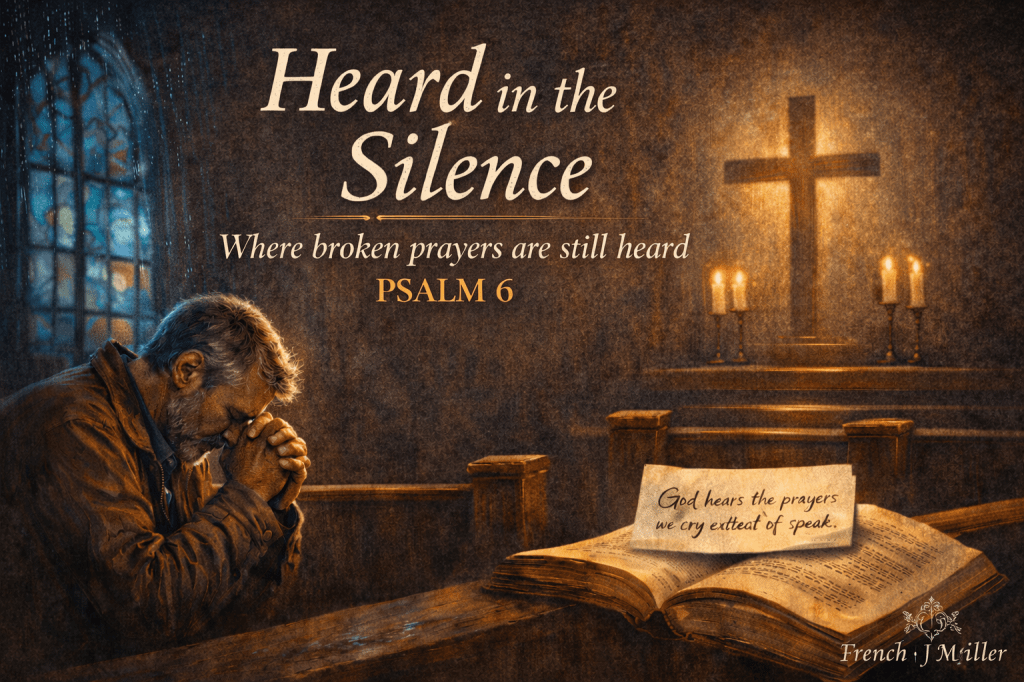
 24/7 Of Praise
Leave a comment