
By French J. Miller
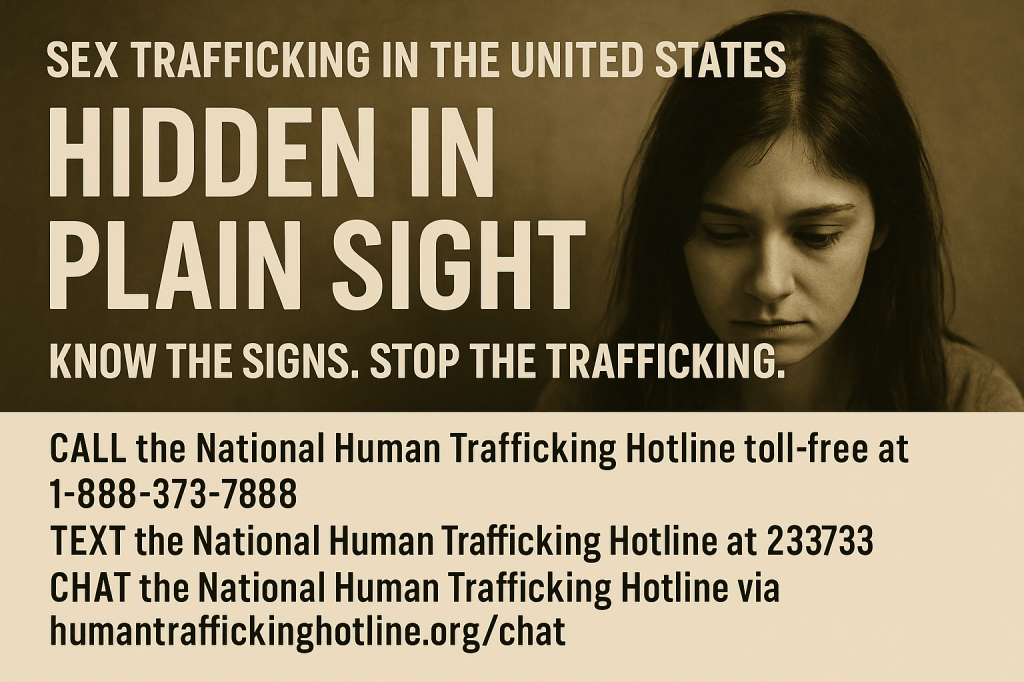
Sex trafficking in the United States is far more pervasive—and far closer to everyday life, than many Americans realize. Contrary to popular depictions that focus on kidnappings or foreign networks, the majority of trafficking cases occur within communities, schools, online platforms, and even families. Victims are often groomed by someone they trust. Traffickers rely on invisibility, blending into daily routines while controlling victims through fear, manipulation, and psychological coercion.
A Crisis in Every State
According to recent data from national hotline reports and federal agencies, sex trafficking affects every state in the country. Major urban centers, small rural towns, military bases, truck stops, and suburban neighborhoods all report cases. The victims range widely in age, background, and gender, though children and vulnerable young adults are most at risk.
Social media has accelerated the problem. Traffickers frequently use platforms like Instagram, Snapchat, TikTok, and gaming apps to groom potential victims, establishing trust before isolating and exploiting them. “The majority of recruitment today begins online,” says one federal investigator. “Traffickers know exactly who to target and what vulnerabilities to exploit.”
Who Is At Risk?
While anyone can fall victim, traffickers often prey on specific vulnerabilities, including:
- Runaway and homeless youth
- Children in the foster care system
- Individuals struggling with addiction
- People facing poverty, unstable housing, or domestic violence
- Youth seeking emotional connection, attention, or support
- Migrants lacking family or community support
Many victims do not self-identify as being trafficked. Some believe they are in a relationship with their trafficker; others fear retaliation, shame, or not being believed.
The Red Flags: Warning Signs of Possible Trafficking
Experts emphasize that recognizing the indicators can save lives. While no single sign proves trafficking, patterns of behavior may signal danger. Key red flags include:
Behavioral Signs
- Sudden withdrawal from family, friends, or school
- New, unexplained relationships with older partners
- Fearful, anxious, or submissive behavior
- Inability to speak freely or appear coached in their answers
- Signs of depression, trauma, or exhaustion
Physical or Situational Signs
- Unexplained bruises, injuries, or signs of physical abuse
- Restricted freedom, someone else controls their money, ID, transportation, or movements
- A minor traveling with someone who is not a guardian
- Living or working in poor conditions, often staying in hotels, motels, or multiple locations
- Lack of personal possessions or access to basic needs
Online Indicators
- Secretive social media accounts
- Online interactions with much older individuals
- Sudden appearance of expensive gifts, money, or new clothes
- Requests to send explicit photos
- Pressure to meet someone they met online
Signs in Public Places
Public settings often reveal subtle cues:
- A companion refuses to let a person speak for themselves
- The victim avoids eye contact or seems fearful
- The victim doesn’t know where they are or lacks personal belongings
- Someone appears to be monitoring them closely
Hotel workers, rideshare drivers, teachers, nurses, social workers, and church communities are often the first line of defense when they know what to look for.
The Role of Communities
Stopping sex trafficking requires more than law enforcement—communities, families, churches, and everyday citizens play a critical role. Education and vigilance are essential. Learn the signs. Talk to your children openly about online dangers. Encourage safe relationships, and report concerns when something feels wrong.
Advocates stress the importance of reporting even if you’re unsure. “One small tip can lead to the rescue of a victim,” says a hotline representative. “You never know what piece of information will complete the puzzle.”
If You Suspect Trafficking
Do not confront a suspected trafficker yourself, it can endanger both you and the victim. Instead, contact professionals trained to handle these situations discreetly and safely.
Need Help or See Something Concerning?
Call the National Human Trafficking Hotline at 1-888-373-7888
Text the National Human Trafficking Hotline at 233733
Chat the National Human Trafficking Hotline via humantraffickinghotline.org/chat
Make a one-time donation
Make a monthly donation
Make a yearly donation
Choose an amount
Or enter a custom amount
Your contribution is appreciated.
Your contribution is appreciated.
Your contribution is appreciated.
DonateDonate monthlyDonate yearly



 24/7 Of Praise
Leave a comment